🎁 Use code SALE8 for 8% OFF — Shop Now →

BPC-157: The Complete Researcher’s Guide to the Body Protection Compound

📋 TABLE OF CONTENTS
What Is BPC-157?
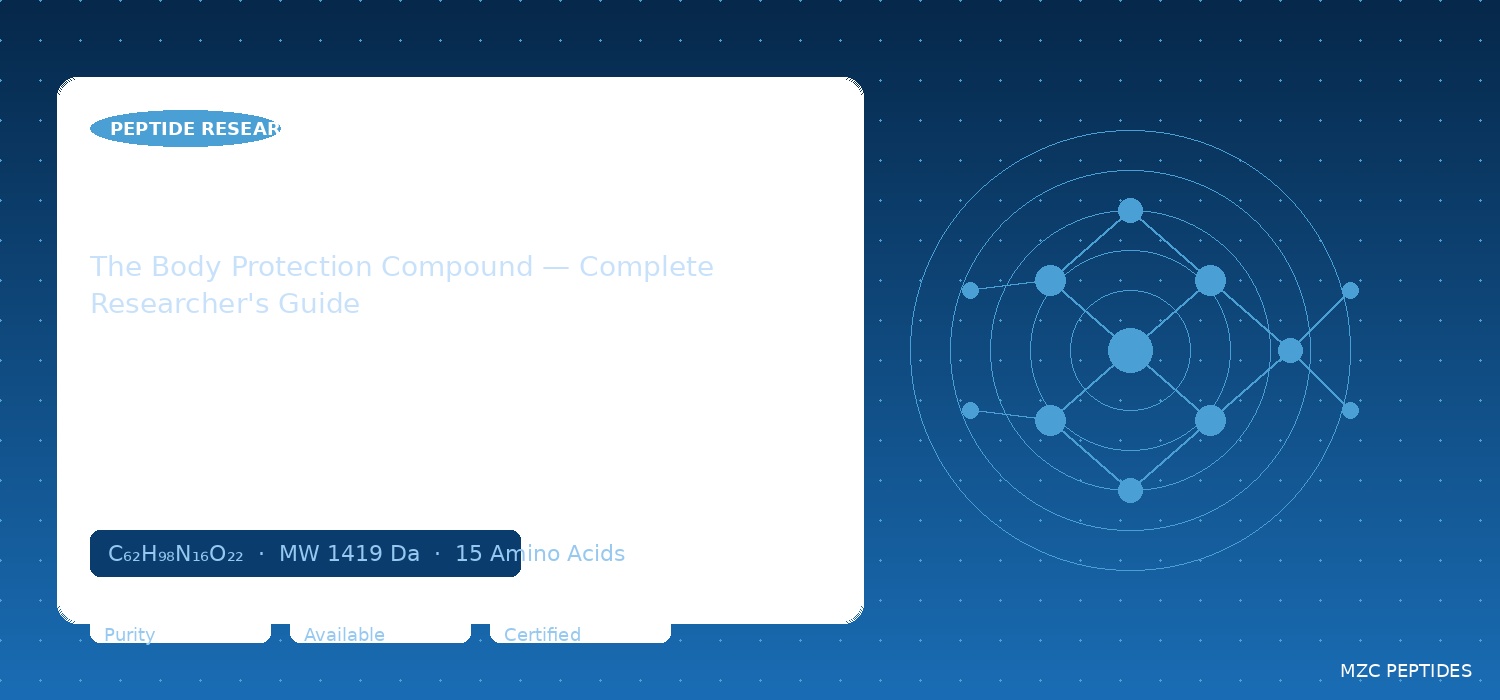
BPC-157 (Body Protection Compound 157) is a synthetic pentadecapeptide — a chain of 15 amino acids — derived from a protein found in human gastric juice. Its full sequence is: Gly-Glu-Pro-Pro-Pro-Gly-Lys-Pro-Ala-Asp-Asp-Ala-Gly-Leu-Val. The molecular formula is C₆₂H₉₈N₁₆O₂₂, with a molecular weight of approximately 1,419 Da.
First isolated and characterized by researchers at the University of Zagreb in the early 1990s, BPC-157 has been the subject of extensive preclinical research across multiple organ systems. What distinguishes it from many research peptides is its remarkable stability in biological environments — unlike many peptides that degrade rapidly in gastric acid, BPC-157 maintains activity even under acidic conditions, a property attributed to its gastric origin.
🔑 KEY FACT
BPC-157 is categorized as a research compound. All peer-reviewed studies to date have been conducted in animal models (primarily rats). It has not been approved by the FDA or any equivalent regulatory body for human therapeutic use.
Mechanism of Action
BPC-157’s biological effects appear to operate through several converging pathways, which may explain its broad activity across different tissue types in preclinical models. The primary mechanisms identified in research literature include:
🩸
Angiogenesis Promotion
BPC-157 has been shown in multiple animal studies to upregulate VEGF (Vascular Endothelial Growth Factor) expression, stimulating the formation of new blood vessels — a key process in tissue repair and regeneration.
🔧
Tendon & Ligament Repair
Research demonstrates BPC-157’s influence on tendon fibroblast activity and collagen synthesis. Studies using rat Achilles tendon transection models have reported accelerated healing compared to controls.
🧠
Nitric Oxide Modulation
The compound appears to modulate the NO (nitric oxide) system, influencing vascular tone, inflammation regulation, and neurological signaling pathways in preclinical models.
🛡️
Gastrointestinal Protection
Derived from gastric juice protein, BPC-157 has demonstrated cytoprotective effects on gastrointestinal mucosa in animal studies, including models of colitis, stomach ulcers, and bowel inflammation.
Key Research Applications
The breadth of BPC-157’s preclinical research profile is unusual among synthetic peptides. Below are the primary areas where published animal studies have demonstrated notable activity:
Musculoskeletal & Connective Tissue Research
Perhaps the most extensively studied area, BPC-157 has shown consistent effects on tendon, ligament, muscle, and bone healing in rodent models. A landmark 2010 study published in the Journal of Orthopaedic Research demonstrated significantly accelerated Achilles tendon healing in rats treated with BPC-157 versus saline controls — with improved tensile strength and earlier vascularization at the repair site.
Gastrointestinal Research
Given its natural origin in gastric juice, the GI protective effects of BPC-157 have been among the earliest and most reproducible findings. Multiple studies have explored its effects in models of chemically-induced colitis, gastric ulceration, esophageal damage, and NSAID-induced gut injury.
Neurological Research
A growing body of animal research has examined BPC-157’s effects on the central nervous system. Studies have investigated its influence on dopaminergic and serotonergic systems, with some rodent models showing anxiolytic and neuroprotective effects. Traumatic brain injury and spinal cord injury models have also been explored.
| Research Area | Model Used | Key Finding (Preclinical) |
|---|---|---|
| Tendon healing | Rat Achilles transection | Accelerated repair, improved tensile strength |
| GI protection | Rat colitis / ulcer model | Reduced mucosal damage, faster ulcer resolution |
| Wound healing | Rat cutaneous wound model | Enhanced angiogenesis, faster wound closure |
| Neurological | Rat TBI / dopamine models | Neuroprotective effects, behavioral improvements |
| Bone healing | Rat femoral defect | Increased bone mineral density at repair site |
Forms & Specifications
BPC-157 is available in two primary forms for research applications, each with distinct advantages depending on the intended protocol:
ACETATE SALT FORM
- Most commonly used in research
- Water-soluble — easier reconstitution
- Suitable for most standard protocols
- Typically ≥98% purity (HPLC)
- Available: 5mg, 10mg vials
ARGINATE FORM (BPC-157 ARG)
- More stable salt form
- Improved oral bioavailability in models
- Preferred for GI-focused research
- Typically ≥98% purity (HPLC)
- Available: 5mg, 10mg vials
Storage & Reconstitution Protocol
Storage Conditions
🧊
Lyophilized (Unopened)
−20°C
Up to 24 months
Up to 24 months
❄️
Reconstituted
2–8°C
Use within 28 days
Use within 28 days
⚠️
Avoid
Light, heat
Freeze-thaw cycles
Freeze-thaw cycles
Reconstitution Steps
Sourcing & Quality Standards
For any research application, the quality and purity of your peptide source directly determines the reliability of your results. When sourcing BPC-157, researchers should look for the following documentation as a minimum standard:
📋
COA
Certificate of Analysis with purity, batch number, and test date
📈
HPLC Report
High-performance liquid chromatography data confirming purity ≥98%
⚖️
MS Data
Mass spectrometry confirming molecular weight matches theoretical value
✅ MZC QUALITY STANDARD
All MZC BPC-157 products are supplied with a full Certificate of Analysis including third-party HPLC and MS data. Purity is ≥98% on every batch. COA documents are available on the product page and shipped physically with every order.
Frequently Asked Questions
⚠️ RESEARCH USE DISCLAIMER
This article is intended for informational and educational purposes for qualified researchers only. BPC-157 is a research compound sold by MZC strictly for laboratory and scientific research use. It is not approved for human consumption, diagnosis, treatment, or prevention of any condition. All referenced studies are preclinical animal models. Researchers are responsible for ensuring compliance with all applicable regulations in their jurisdiction.
MZ
MZC Research Editorial Team
Peptide Science · MZC Peptides
The MZC editorial team consists of peptide scientists and research professionals dedicated to providing accurate, evidence-based information for the global research community. All articles are reviewed against current peer-reviewed literature.